Med Spa Marketing Funnel: Stages, Metrics and Fixes
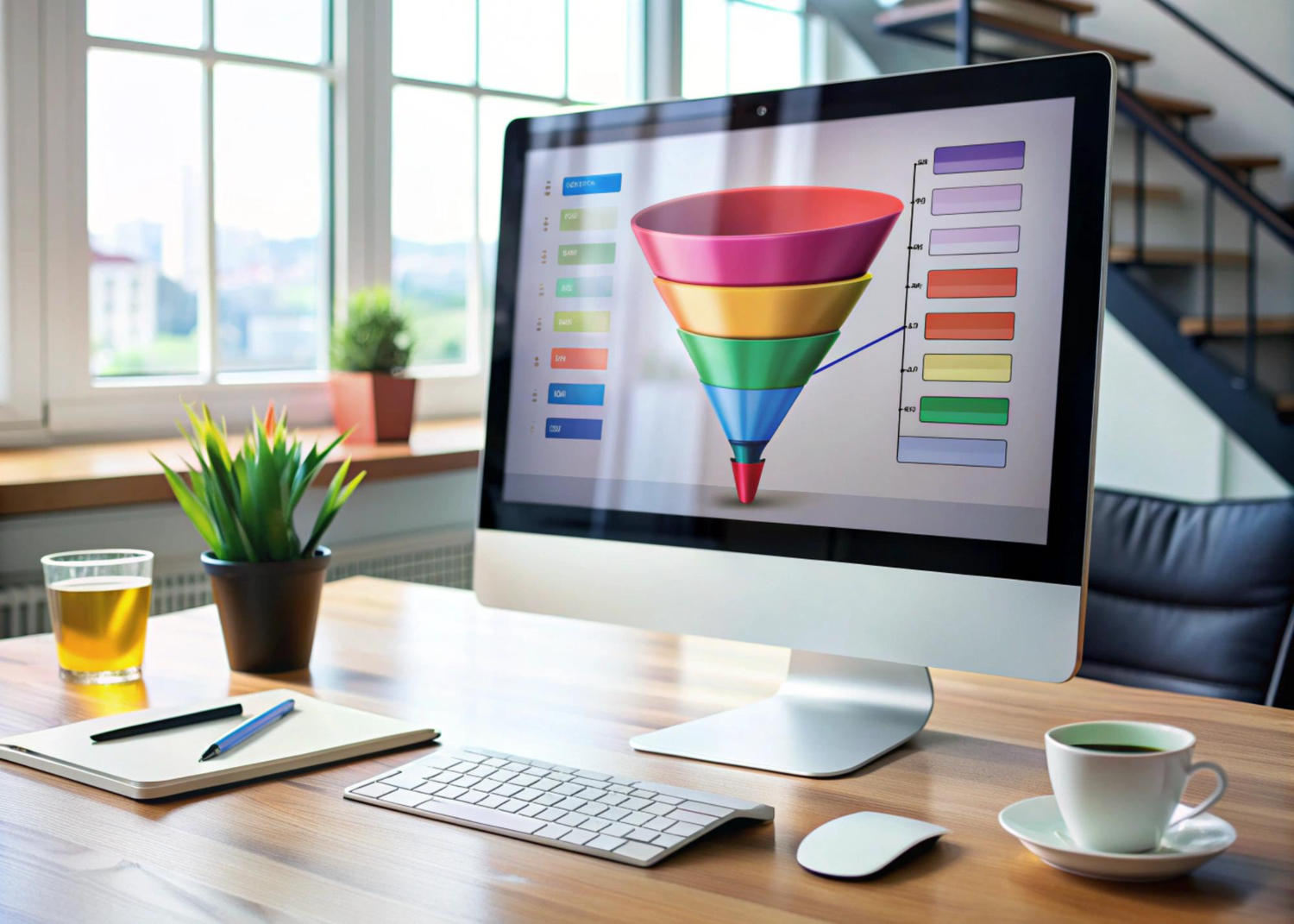
A med spa marketing funnel is the sequence that turns a stranger into a repeat client: an offer that earns attention, ads and search that bring enquiries, a fast booking conversation, a consultation that people actually attend, a first treatment, and a planned rebooking. Most med spas do not have a traffic problem so much as a leak between stages, so the useful question is not "how do we get more leads" but "which stage loses the most people, and what does that cost us". This guide breaks the funnel into six stages, gives the metric to track at each one, and shows how to find the weakest link.
Key takeaways
- Treat the funnel as six measurable stages: offer, traffic, enquiry, booked consultation, attended consultation, rebooked client.
- Track one primary metric per stage so you can see where people drop out, instead of judging everything on cost per lead.
- Speed to first response and consultation show rate usually matter more than ad targeting.
- The profit in aesthetics sits in the second and third visit, so rebooking belongs inside the funnel, not after it.
- Health advertising rules from Meta and the FTC shape what your offer and creative can say, so build compliance in from the start.
What is a med spa marketing funnel?
It is the system that moves a person from first seeing your brand to becoming a regular client, with each step designed and measured. A generic funnel stops at "lead". An aesthetics funnel has to go further, because a lead who never attends a consultation, or a client who never returns after a first treatment, rarely covers the cost of acquiring them.
The market is also more crowded than it was. The American Med Spa Association reports that U.S. medical spa locations grew from 8,899 in 2022 to 10,488 in 2023, according to its 2024 State of the Industry recap. More competitors bidding on the same local searches and audiences means each enquiry costs more, which makes every leak downstream more expensive.
The six stages below apply whether you run one location in Texas or three clinics in Riyadh. The channels and language change by market; the structure does not.
What are the stages of a med spa funnel, and what should you measure?
Use this table as the backbone of your reporting. Each stage has one question it answers and one primary metric.
| Stage | What happens | Primary metric | Common failure point |
|---|---|---|---|
| 1. Offer | A clear reason to book now, such as a consultation with a named practitioner | Ad click-through rate and landing page conversion rate | Vague "book now" with no reason to act |
| 2. Traffic | Paid social, search ads, Google Business Profile, referrals | Cost per enquiry by channel | Audiences outside a realistic travel radius |
| 3. Enquiry | Form, call, DM or WhatsApp message | Time to first response | Messages answered hours later |
| 4. Booked consultation | Enquiry becomes a calendar appointment | Enquiry-to-booked rate | No clear next step on price or suitability questions |
| 5. Attended consultation | Person shows up and decides on treatment | Show rate and consult-to-treatment rate | No reminders, no deposit policy, weak consult structure |
| 6. Rebooked client | Next visit booked before the client leaves | Rebooking rate within your normal treatment interval | Rebooking left to the client to remember |
If you only track the first two rows, you will keep buying more traffic to fix problems that sit in rows three to six.
How should a med spa build an offer that converts?
The offer is the reason someone acts today instead of saving the post for later. For aesthetics, the strongest offers usually reduce uncertainty rather than cut price. Examples that work without discounting treatments:
- A consultation framed around a specific concern, with a named, credentialed practitioner.
- A skin or treatment assessment that ends with a written plan the client can take away.
- A clear explanation of what happens at the first visit, how long it takes and what it costs to attend.
Two constraints shape the offer. First, Meta's health and wellness advertising standards prohibit ads for cosmetic procedures that try to create negative self-perception or present an ideal body or appearance, and they require some health-related ads to target people aged 18 or older. Second, the FTC's Health Products Compliance Guidance makes advertisers responsible for the claims consumers reasonably take from an ad, including claims implied by images and testimonials. Before-and-after content needs care: it should be typical, accurate and supported, not a best case presented as the norm. Gulf markets add their own approval requirements for healthcare advertising, so check local rules before launch.
Which traffic channels feed a med spa funnel best?
There is no single best channel. Each one brings people at a different stage of intent, and a healthy funnel uses more than one:
- Search ads and local search. People searching for a treatment near them are already in research mode. A complete Google Business Profile with services, photos and recent reviews supports both paid and organic results.
- Paid social (Meta, TikTok). Creates demand among people who were not searching. Short educational video about what a consultation involves tends to suit aesthetics better than hard sell.
- Referrals and existing clients. Usually the cheapest new clients, but only if you ask consistently and track the source.
- Messaging apps. In the Gulf and Pakistan, click-to-WhatsApp often replaces the web form as the main enquiry route.
Every paid click should land on a page that matches the ad. A treatment ad that sends people to a general homepage wastes the click; our breakdown of why landing pages get traffic but not leads covers the usual causes.
How fast should a med spa respond to new enquiries?
As fast as you can staff for, ideally within minutes during opening hours. Aesthetic enquiries are often impulsive: someone fills in a form after watching a video, and their interest fades quickly. If the reply comes the next morning, they may already have booked elsewhere or lost interest.
Practical rules for the enquiry stage:
- Route every enquiry, whether form, call, DM or WhatsApp, into one inbox or CRM so nothing is missed.
- Set a response-time target for each channel and report on it weekly.
- Prepare answers to the three questions people always ask: what it costs to attend, whether they are suitable, and what happens at the visit.
- End every reply with a specific next step, such as two available consultation times.
We explain the mechanics, and why minutes matter, in our guide to lead response time.
How do you improve consultation show rate?
A booked consultation that nobody attends costs you the ad spend, the staff time and the empty slot. Show rate is often the single biggest lever in the med spa marketing funnel because it multiplies everything above it. Ways to lift it:
- Confirm immediately. Send a confirmation with the date, time, address, parking notes and practitioner name the moment the booking is made.
- Remind twice. One reminder a day or two before and one on the day, by text or WhatsApp.
- Use a deposit or card-on-file policy for consultations, stated clearly at booking.
- Shorten the gap. The longer the wait between booking and visit, the more people drop out. Offer the earliest slots first.
- Pre-qualify gently. A short pre-visit form about goals and medical history sets expectations and signals that the appointment is real.
Once people attend, the consultation itself needs a structure: listen to the concern, explain options honestly, including when treatment is not suitable, and give a written plan. That is both better care and better conversion.
Why does rebooking belong in the funnel?
In aesthetics, many treatments are maintained over time, so a client's value builds over repeat visits. A funnel that ends at the first treatment ignores where most of the gross profit sits. Make rebooking a stage with an owner and a metric:
- Book the next appointment before the client leaves, based on the practitioner's recommended interval.
- Send a follow-up message after treatment with aftercare information and the next booking date.
- Run a recall sequence for clients who have not rebooked within their usual interval.
- Measure rebooking rate by practitioner and by treatment type, so coaching goes where it is needed.
Rebooking also changes how much you can afford to spend on acquisition. If clients return several times a year, you can pay more for a first visit and still be profitable.
How do you find the weakest stage in your funnel?
Run this worked example with your own numbers. The figures below are assumptions for illustration only, not benchmarks.
- 200 enquiries in a month.
- Enquiry-to-booked rate of 40%, giving 80 booked consultations.
- Show rate of 70%, giving 56 attended consultations.
- Consult-to-treatment rate of 60%, giving about 34 new treated clients.
Now improve one stage at a time while holding the others steady. Raising show rate from 70% to 80% lifts attended consultations from 56 to 64, and treated clients from about 34 to about 38, with no extra ad spend. Raising enquiry-to-booked from 40% to 50% has an even larger effect, because it feeds every stage below it. The stage with the largest gap between your current rate and a realistic target is where to start.
To run this properly you need each enquiry tagged with its source and followed through to treatment and rebooking. Our guide to full-funnel attribution explains how to connect ad clicks to revenue.
Frequently Asked Questions
How long does it take to build a med spa marketing funnel?
The basic pieces, meaning an offer, a matching landing page, tracking, a shared inbox and reminder messages, can usually be set up in a few weeks. Getting reliable stage-by-stage data takes longer, because you need at least one or two full months of enquiries followed through to treatment before the numbers are worth acting on.
Should a med spa offer discounts to get new clients?
Discounts can fill the calendar, but they often attract price-driven clients who do not return at full price. A clear consultation offer, strong reviews and fast follow-up usually build a better client base. If you do run a promotion, track rebooking rates for those clients separately so you can see whether it pays off over time.
What metrics should a med spa owner review every week?
Review enquiries by channel, average response time, booked consultations, show rate and consult-to-treatment rate each week. Review rebooking rate and cost per treated client monthly, because they need more data to be stable. Looking at the full chain together stops you from fixing a symptom in one stage while the real leak sits elsewhere.
Can the same funnel work for med spas in the Gulf?
The six stages are the same, but the details change. In Saudi Arabia and the UAE, WhatsApp is often the main enquiry channel, creative may need Arabic and English versions, and healthcare advertising can require approval from local authorities. Check the current rules in each emirate or region before launching campaigns, and adapt your response workflow to messaging.
Do I need a CRM for my med spa funnel?
You need one place where every enquiry, booking and outcome is recorded with its source. That can be your practice management software if it tracks lead sources, or a separate CRM connected to it. Without that link, you can see ad costs and revenue but not which campaigns produced clients who actually returned.
If you want an outside view of where your funnel is leaking, a Growth Infrastructure Review maps each stage from ad to rebooking and shows which one to fix first. You can book a Growth Infrastructure Review to walk through it together.
Ready to Build Revenue Infrastructure?
We analyse your acquisition system and identify exactly where leads, conversions, and revenue are leaking. Free. 30 minutes.
Free · No commitment · Response within 24 hours